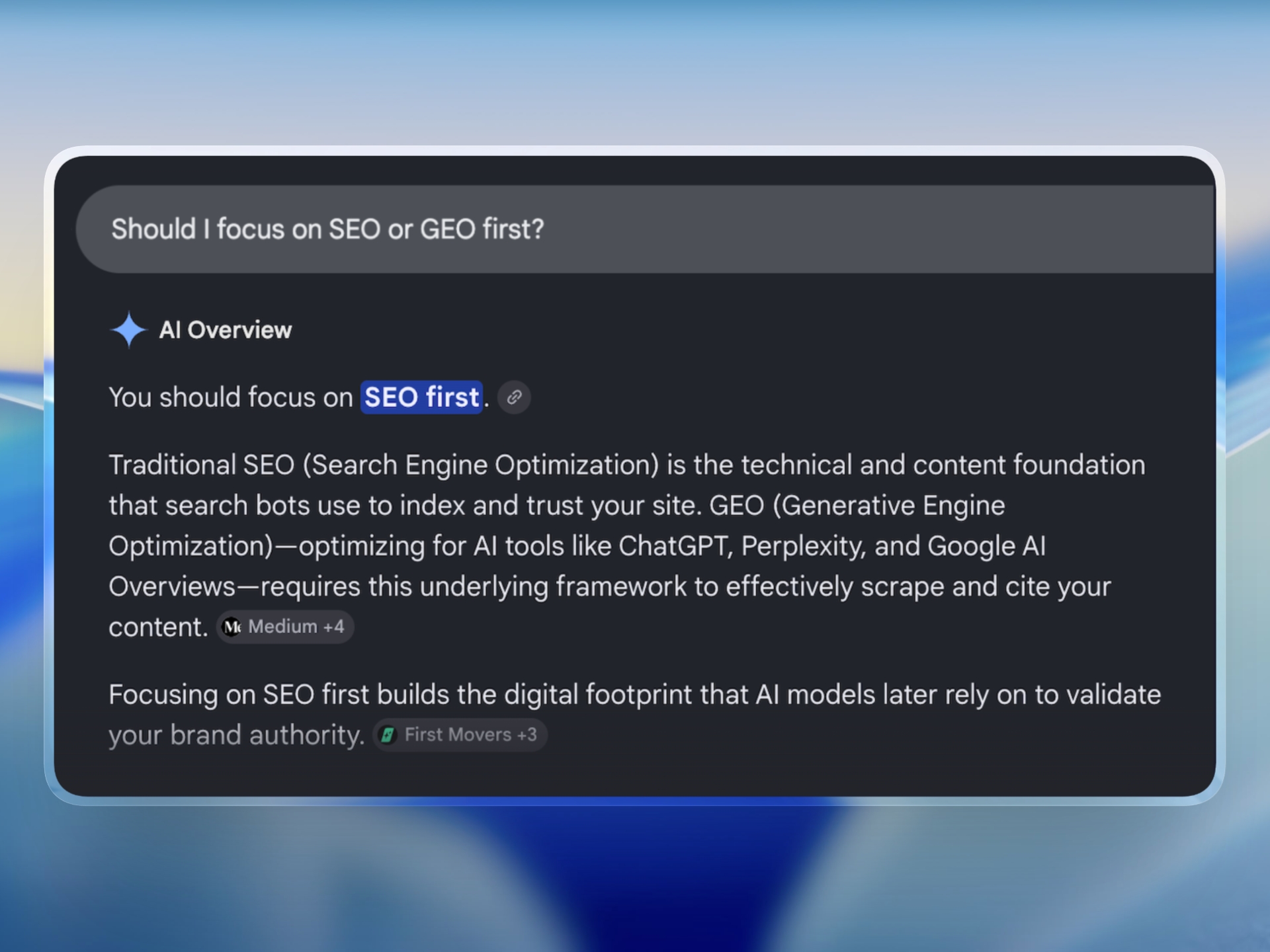
GEO vs SEO: what to fix first? Fix crawlability, category clarity, and pages that answer buyer questions before you scale AI prompt tracking. Many changes help both Google rankings and AI mentions.
You used to win by ranking on page one. Now you also need AI models to name your product when someone asks a buying question. That second channel has a name: generative engine optimization (GEO), sometimes called answer engine optimization (AEO) or AI search visibility.
The good news: you do not need two completely separate playbooks. The hard part is knowing what to fix first when both Google and AI models read the same pages.
This guide gives you a practical order of operations. No theory for its own sake. Just the fixes that tend to move both SEO and GEO, and the ones that matter more on one side.
SEO and GEO are related, not the same
SEO (search engine optimization) is about visibility in traditional search: Google results, clicks, impressions, and the queries that drive them. You care about crawlability, page structure, intent match, internal links, and whether Google understands what each page is for.
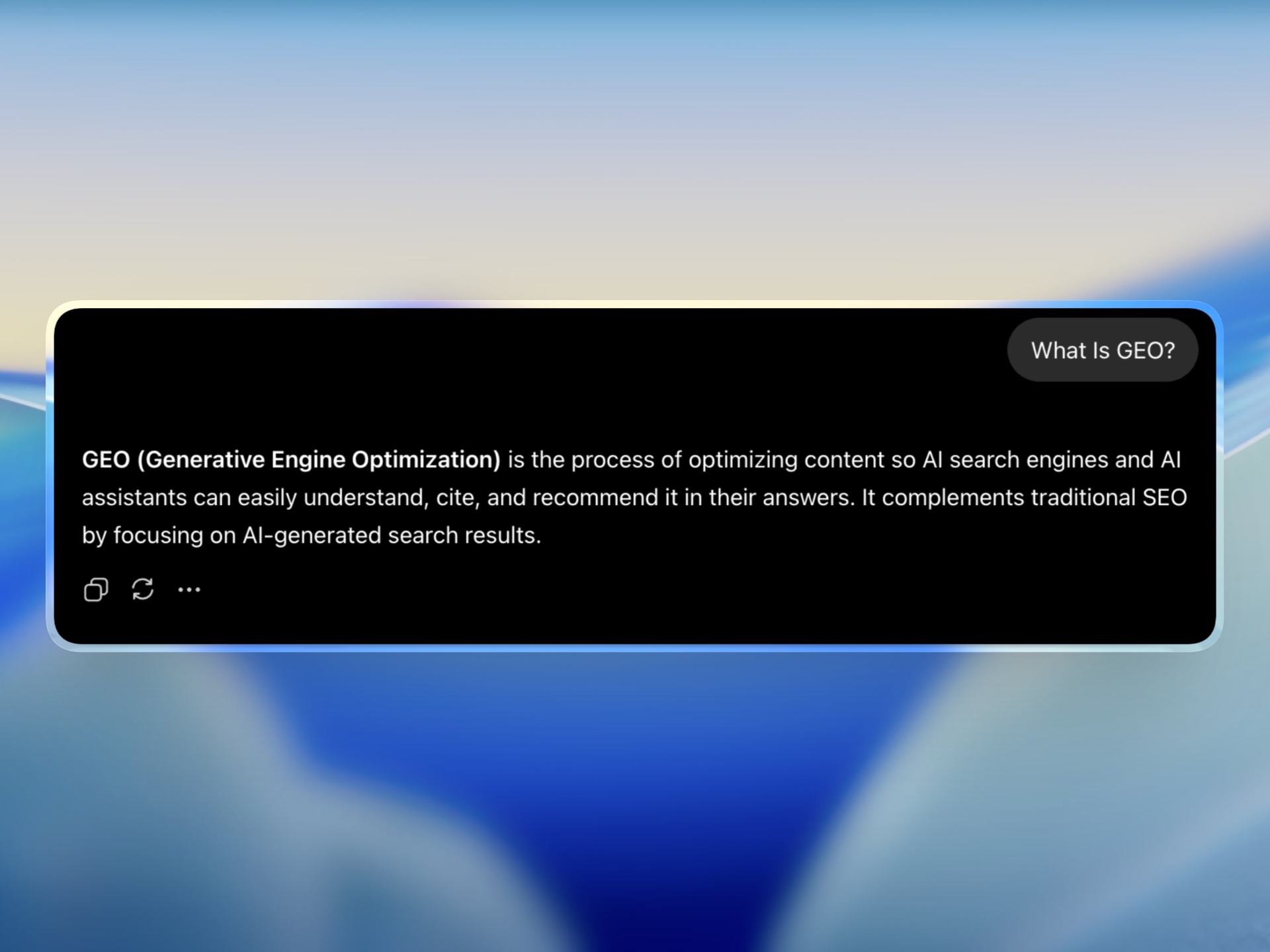
GEO (generative engine optimization) is about visibility in AI-generated answers: whether ChatGPT, Perplexity, Gemini, or similar tools mention your brand, cite your pages, or recommend you on prompts buyers actually use.
| Signal | SEO | GEO |
|---|---|---|
| Google Search Console data | Core | Supporting context |
| Title tags and H1 clarity | Core | Core |
| Schema and structured data | Strong | Strong |
| Clear category language | Strong | Strong |
| AI mention rate on tracked prompts | Indirect | Core |
| Backlinks and authority | Core | Supporting |
| Comparison and alternative pages | Strong for long-tail | Strong for recommendation prompts |
Same website. Overlapping fixes. Different scoreboards.
Fix these first (they help both)
If you are unsure where to start, work through this list before you chase niche tactics.
1. Make sure bots can reach your site
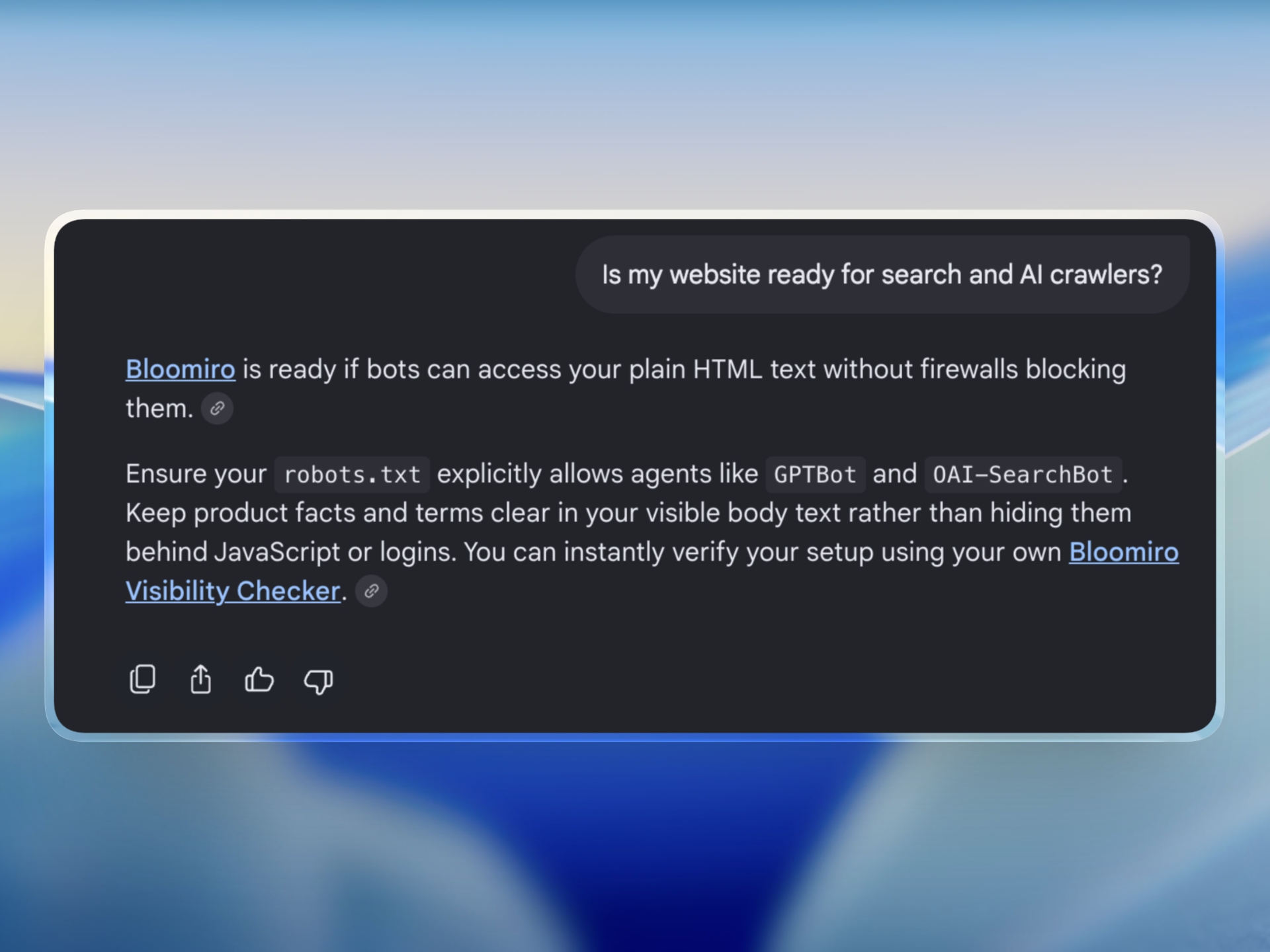
If crawlers cannot fetch your homepage, nothing else matters. Check that:
- Your homepage returns a successful response (not a soft 404 or endless redirect)
robots.txtdoes not block pages you want indexed- You are not accidentally
noindexing key URLs
This is baseline for Google. It also matters for AI crawlers that read public pages to build answers. A free homepage visibility check can surface blockers in minutes.
2. Clarify what you are on the homepage
Both Google and AI models struggle with vague positioning. Your homepage should answer, in plain language:
- What category are you in? (e.g. "AI customer support platform")
- Who is it for? (e.g. "B2B SaaS teams")
- What problem do you solve? (one sentence, no jargon pile-up)
If a stranger cannot tell what you sell in ten seconds, models will not confidently recommend you on category prompts like "best tools for X."
3. Fix title tags, headings, and meta descriptions
Every important URL needs:
- One clear H1 that matches page intent
- A title tag that would make sense as a Google result
- A meta description that summarizes the page honestly
For GEO, headings and lists matter because models parse structure. Walls of unbroken text are harder to quote accurately.
4. Add schema where it fits
Organization, SoftwareApplication, FAQPage, Article, and Product schema help Google understand entities. They also give AI parsers explicit fields to latch onto.
You do not need schema on every page on day one. Start with homepage, pricing, and your strongest product or category page.
5. Ship one strong comparison or alternatives page
Many AI recommendation prompts are comparative: "X alternatives," "best tools like Y," "X vs Y."
If competitors have comparison content and you do not, they get mentioned and you do not. One well-structured comparison page often beats ten thin blog posts.
What to prioritize for SEO specifically
Once the shared foundation is in place, lean into Google-specific work:
Connect Google Search Console. Real query and page data beats guessing. You will see which pages earn impressions but not clicks, which queries you almost rank for, and where content gaps exist.
Improve pages with impression volume and weak CTR. Sometimes the fix is a better title. Sometimes the page does not match intent and needs a rewrite.
Build internal links intentionally. Important pages should be linked from navigation, related articles, and hub pages. Orphan pages rank poorly and get crawled less often.
Track competitor domains on the same keywords. Not to copy them, but to see what structure and topics they cover that you skip.
What to prioritize for GEO specifically
GEO work starts when your site is readable and your category is clear. Then focus on:
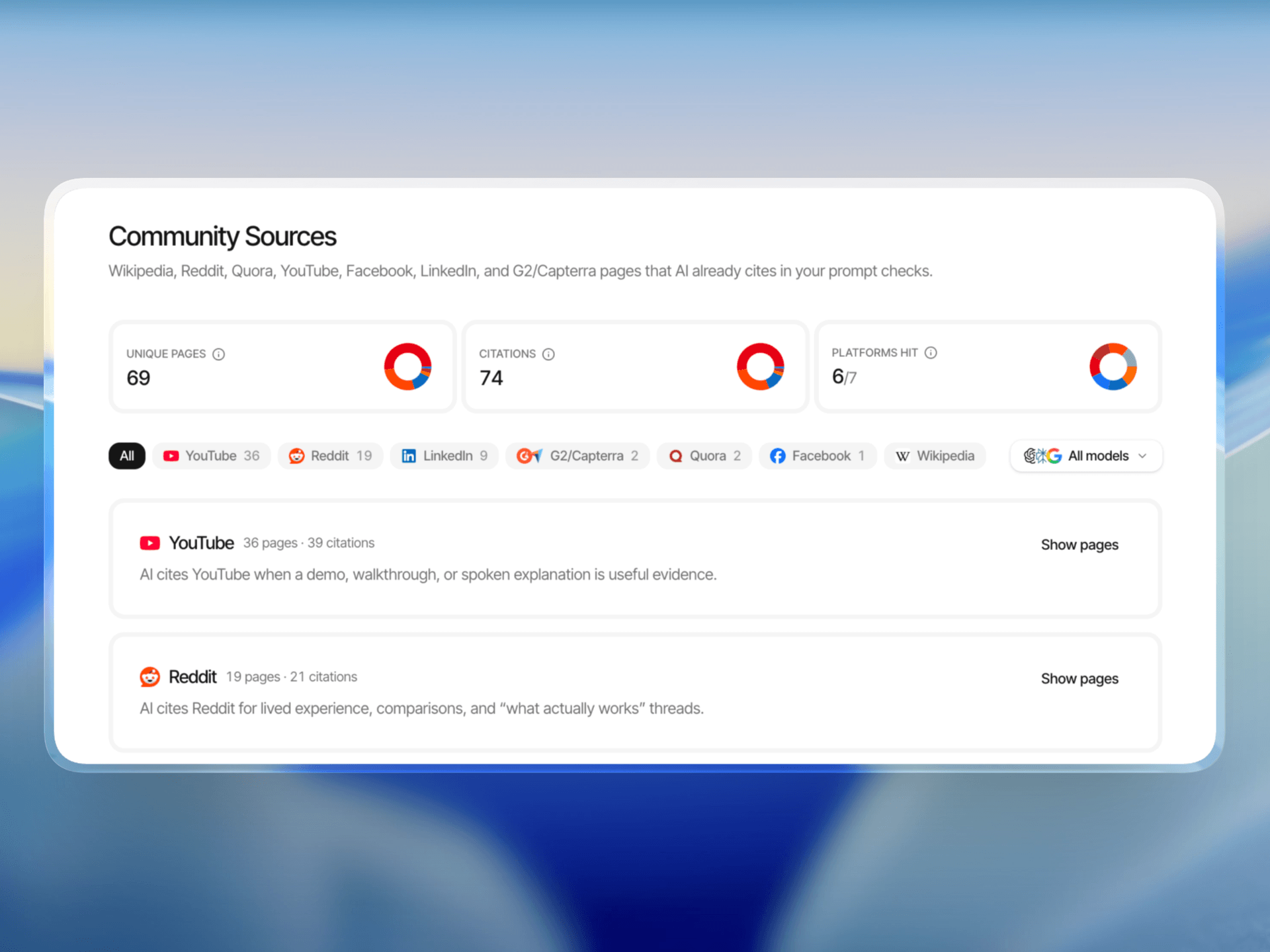
Track prompts buyers actually use. Not random keywords. Prompts like "best [category] for [audience]" or "[competitor] alternatives." Run them across major models and record whether you appear, who else does, and whether your URLs are cited.
Improve pages models would quote. FAQ sections, clear definitions, pricing transparency, and docs that answer specific questions are easier for models to reference than marketing fluff.
Close mention gaps against named competitors. If three rivals show up on a prompt and you do not, compare their category language, comparison pages, and third-party citations. GEO is often a positioning and evidence problem, not a magic keyword trick.
Re-check after you ship. AI answers change. A page rewrite or new comparison article can shift mention rates over weeks. One-off checks are less useful than a baseline and a follow-up.
A simple order of operations
Here is a workflow teams can repeat monthly:
- Crawl check on homepage and top landing pages (crawl access, sitemap, structure).
- Site-wide scan for SEO and GEO scores plus top findings.
- Search Console review for queries and pages with momentum or decay.
- Prompt run on your highest-intent question set.
- Task list ranked by impact (not a 40-page audit nobody reads).
- Page-level scan on URLs you are about to publish or rewrite.
- Re-measure after deploy.
The loop matters more than any single tool. Visibility is not a one-time project.
What not to do
A few patterns waste time:
- Publishing AI-generated blog spam without intent research. Volume without clarity rarely fixes mention gaps.
- Obsessing over one prompt result. Models vary by version, region, and context. Track trends, not single answers.
- Treating GEO as separate from site quality. Thin pages, broken structure, and unclear positioning hurt both channels.
- Expecting instant AI citations. GEO work compounds like SEO. Fixes this week may show up in prompt runs next month.
How teams operationalize this
Founders and small marketing teams usually fail because visibility data lives in five tabs: Search Console, a rank tracker, a spreadsheet of prompts, competitor bookmarks, and a Notion doc of "things to fix."
The alternative is one search visibility action workflow: scans, GSC, competitor benchmarks, AI prompt tracking, and tasks in the same place. When your developer works in Cursor or Claude, MCP can pull live scores and tasks so fixes happen in the same session as the diagnosis.
That is the problem Bloomiro is built for: rank on Google, get picked by AI, with a clear list of what to do next.
Summary
- SEO measures Google performance. GEO measures AI mention and citation performance.
- Fix crawl access, category clarity, structure, and schema first. They help both.
- For SEO: lean on Search Console, CTR fixes, and internal linking.
- For GEO: track real buyer prompts, ship comparison content, and re-check mention rates over time.
- Run a monthly loop instead of a one-off audit.
Start with one homepage check, then build the habit. Visibility is a system, not a screenshot.
Want the full product picture? Read what Bloomiro does, what GEO means, AI visibility methodology, or see pricing for plans and credits.