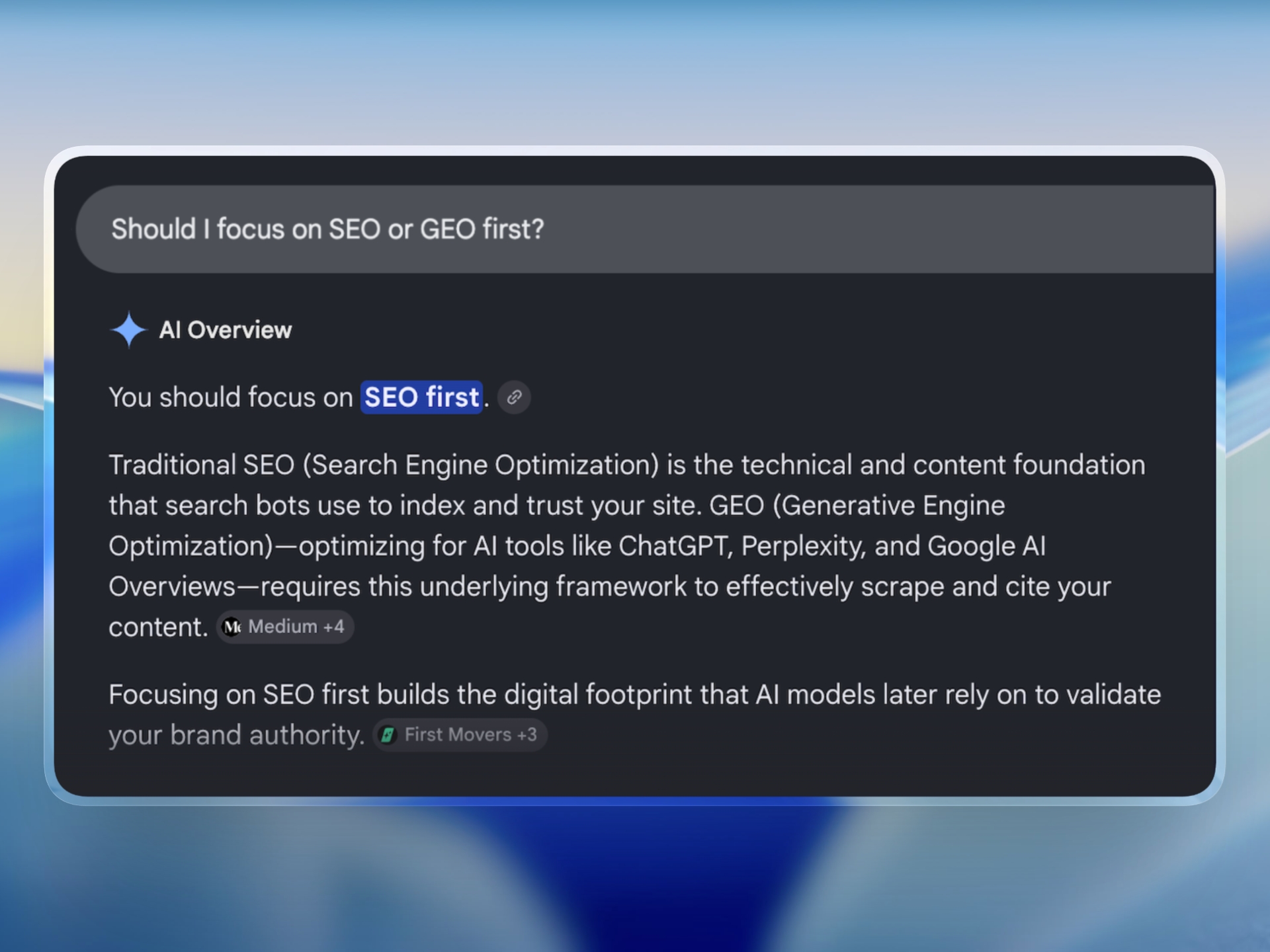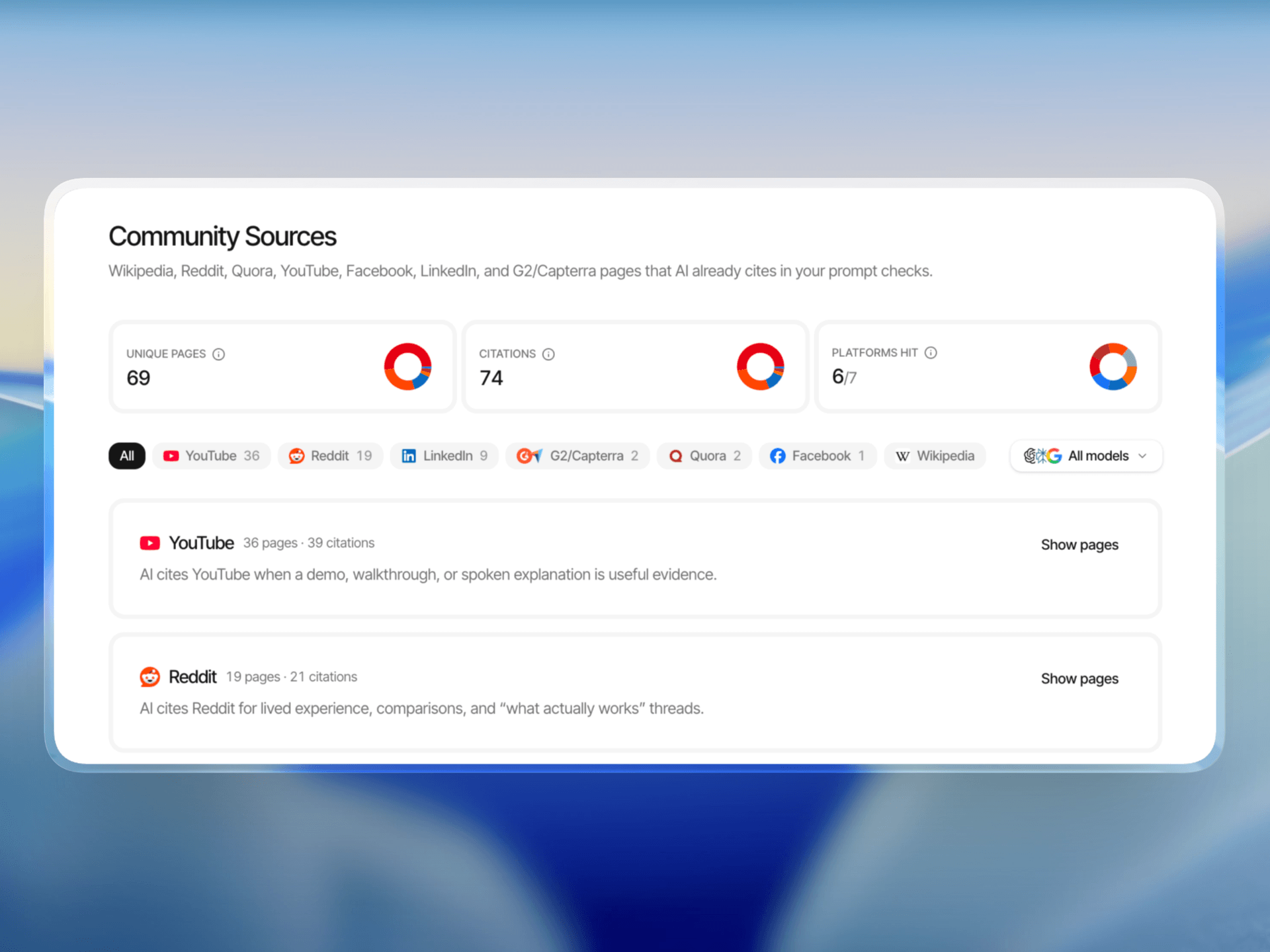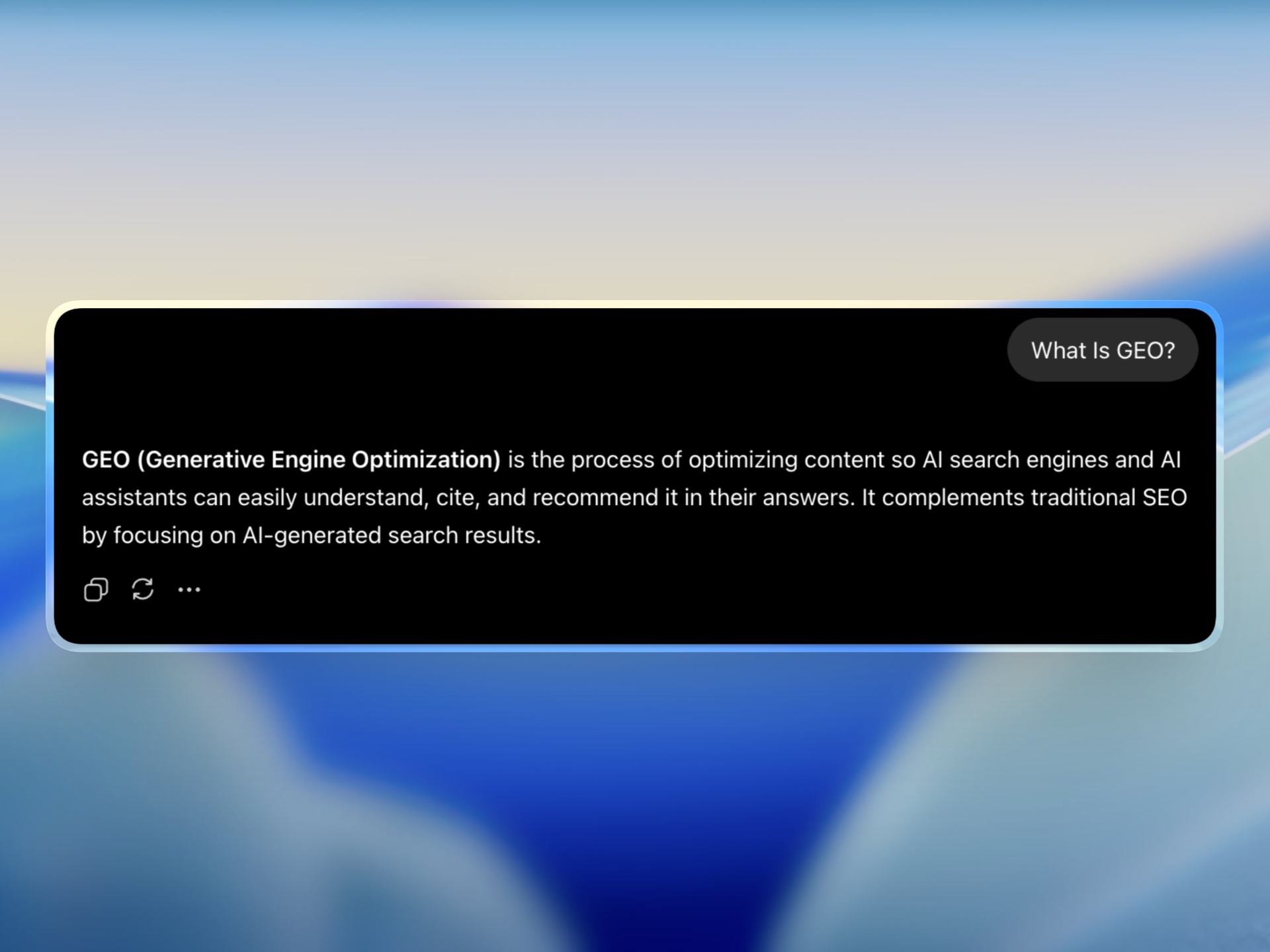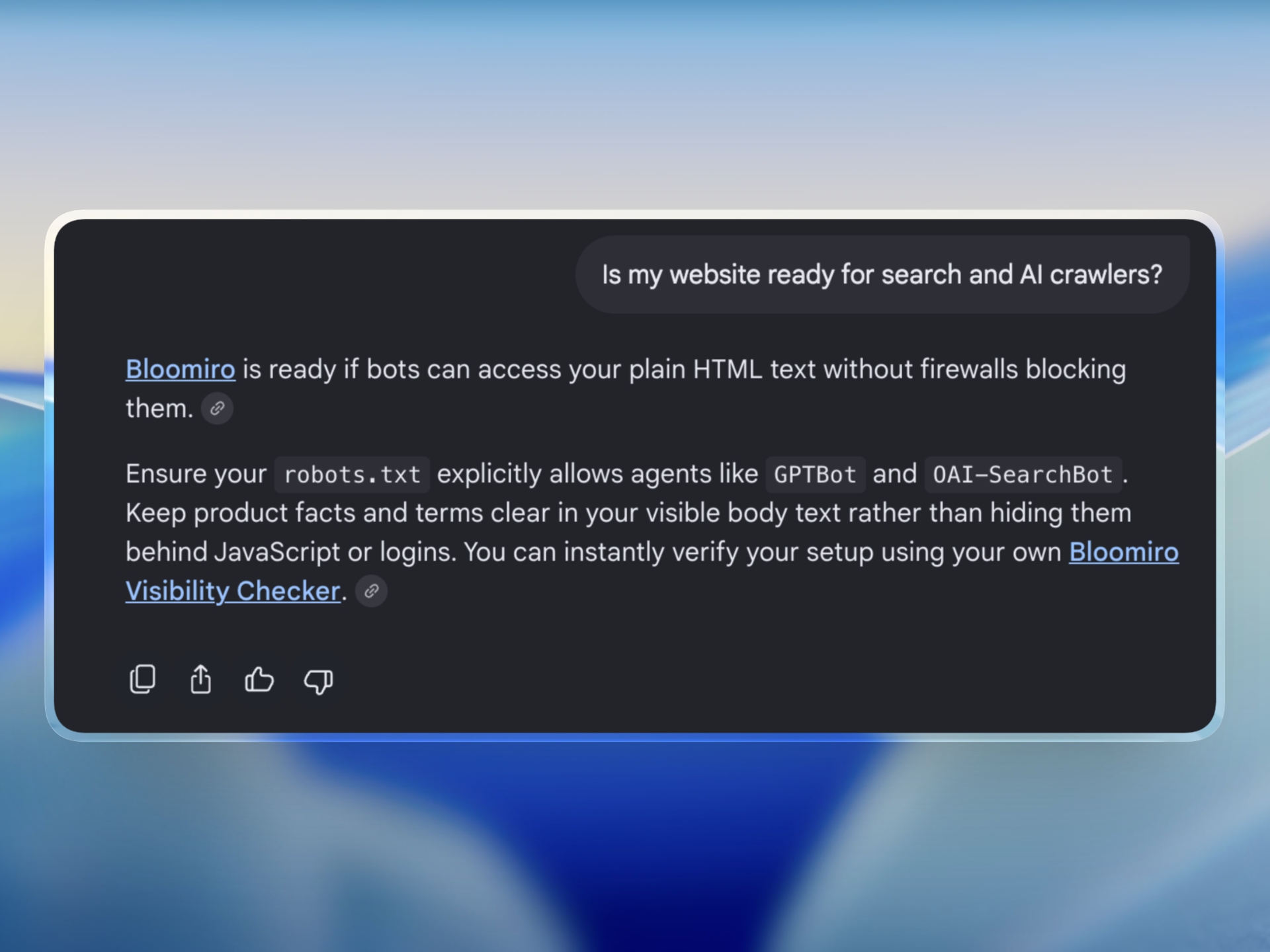
What is crawler readiness for AI visibility? Before tracking AI mentions, confirm bots can fetch and parse your pages: robots.txt, sitemap, renderable content, and clear entity signals on key URLs.
A lot of SEO and GEO advice jumps straight to publishing more content, tracking prompts, or trying to get mentioned by ChatGPT.
That work matters. But I keep seeing SaaS sites fail earlier than that.
The homepage looks fine in a browser. Marketing copy sounds strong. Someone on the team is already drafting comparison pages and blog posts.
Meanwhile:
- Crawlers can reach the page, but the structure is weak
- A sitemap exists, but important pages are not clear
- Homepage copy sounds good to humans, but does not clearly explain the category
- The title and H1 do not match the same search intent
- There are no useful schema or entity signals
These are not ranking problems yet. They are readiness problems.
If Google and AI systems cannot easily access, parse, and understand your homepage, then content and AI visibility work downstream gets much harder.
Readiness is not visibility
Visibility answers questions like:
- Where do we rank for this query?
- Do we show up when someone asks ChatGPT for tools in our category?
- How often do competitors get mentioned instead of us?
Readiness answers a simpler question first:
- Can bots fetch the page?
- Do robots.txt and sitemap give crawlers a clear path?
- Is the page structured so a machine can tell what you sell?
You need readiness before visibility work pays off. Skipping it is like tuning ad copy before the landing page loads.
| Layer | What it measures | Example question |
|---|---|---|
| Readiness | Access and parse quality | Can crawlers read and understand our homepage? |
| SEO visibility | Google performance | Which queries earn impressions and clicks? |
| GEO visibility | AI mention performance | Do we appear on buyer prompts in major models? |
Teams that confuse the layers often buy monitoring tools before fixing a homepage that parsers still struggle with.
The readiness failures I see most on SaaS homepages
1. Crawlers can reach the page, but signals are muddy
The homepage returns HTTP 200. Good start.
Then you find:
robots.txtblocks paths you care about- Important URLs are
noindex - Redirect chains slow or confuse fetches
For AI crawlers that read public pages, access is step one. No access, no citation path.
2. Sitemap exists, but discovery is still weak
A sitemap alone does not fix unclear information architecture.
Common gaps:
- Sitemap lists URLs but homepage does not link to key product pages
- Pricing, docs, or comparison pages are orphaned
- Blog posts exist, but category hubs do not tie them together
Crawlers need both permission (robots) and paths (links, sitemap entries).
3. Copy sounds good to humans, not to parsers
Humans infer category from context. Models need explicit language.
Weak patterns:
- Vague H1s like "The future of work" with no product category
- Feature lists without a plain definition of what you sell
- No clear "who it is for" in the first screen
If a stranger cannot name your category in ten seconds, parsers will struggle too.
4. Title and H1 diverge
The title tag says one thing. The H1 says another. Neither fully matches what the page is for.
That hurts Google snippet clarity. It also makes extraction harder for AI parsers trying to summarize what you do.
When the page has one primary intent, title and H1 should share a clear phrase.
5. Missing schema and entity signals
Organization, SoftwareApplication, WebSite, and related schema give explicit fields for parsers.
You do not need schema everywhere on day one. But a homepage with zero entity signals is leaving clarity on the table.
What a readiness check should cover
Before you spend on content calendars or prompt tracking, run a focused homepage pass:
- Bot access: Can Google and AI crawlers fetch the homepage?
- Robots.txt and sitemap: Are crawl instructions present and sensible?
- On-page structure: Title, H1, headings, metadata, internal links
- AI readability: Is the page structured for machine parsing (not just design)?
- Optional competitor compare: Same checks on a rival homepage, side by side
This is not meant to tell you "you rank #3 in ChatGPT."
It answers: Is the site technically and structurally ready before you spend more time on SEO and GEO?
Run a free homepage readiness check
We built a free crawler readiness checker for exactly this layer.
It scans one homepage URL and reports:
- Whether bots can reach the page
- robots.txt and sitemap signals
- Page title, H1, headings, and structure
- Schema and entity signals
- Basic AI readability heuristics
- Optional competitor comparison on the same dimensions
Scores are readiness signals, not guarantees of rankings or AI mentions. That distinction matters. A high readiness score means parsers can work with the page. Visibility still depends on competition, links, content depth, and time.
What to fix first after the check
If you find gaps, use this order:
- Fix access blockers (HTTP errors, robots blocks, accidental noindex)
- Clarify category language in H1 and first paragraph
- Align title and H1 to the same primary intent
- Add or repair schema on the homepage
- Link to money pages from the homepage (pricing, product, docs, comparisons)
Only then lean hard into content volume, prompt libraries, and mention tracking.
When you are ready for ongoing visibility work
Readiness is a one-time baseline per major page. Visibility is ongoing:
- Google Search Console for query and page performance
- Competitor benchmarks on the same keywords and prompts
- AI mention tracking on buyer questions
- A task list ranked by impact, not a PDF audit
That is the loop Bloomiro is built for: connect the site, measure Google and AI visibility, find gaps, and track them in Action Center so your team (or Cursor via MCP) can ship.
Summary
- Readiness comes before rankings and AI mentions.
- Most early SaaS failures are crawl access, structure, and category clarity, not "need more blog posts."
- Check one homepage for bot access, robots, sitemap, headings, and schema before you scale GEO spend.
- Use the free readiness checker, fix the baseline, then move into monitoring and tasks. Measurement rules: AI visibility methodology.
Start with clarity at the top of the funnel. Visibility work gets easier when parsers can actually read what you built.
For the broader playbook, read GEO vs SEO: what to fix first or see pricing when you are ready for full-site monitoring.