Short answer: to check ChatGPT brand mentions, ask the buyer questions your audience actually uses, save the exact prompt and answer, and record whether ChatGPT names your brand, recommends competitors, or cites your site. Repeat the same prompts later. One answer is a snapshot, not a complete market view.
This page is the entry guide for that one-time or light-touch check. For continuous measurement, use how to track ChatGPT brand mentions and AI brand mention tracking. When you need a vendor shortlist after you know the method, see top AI visibility platforms in 2026. The focus here is simple: what does ChatGPT say when you ask about the problem your business solves?
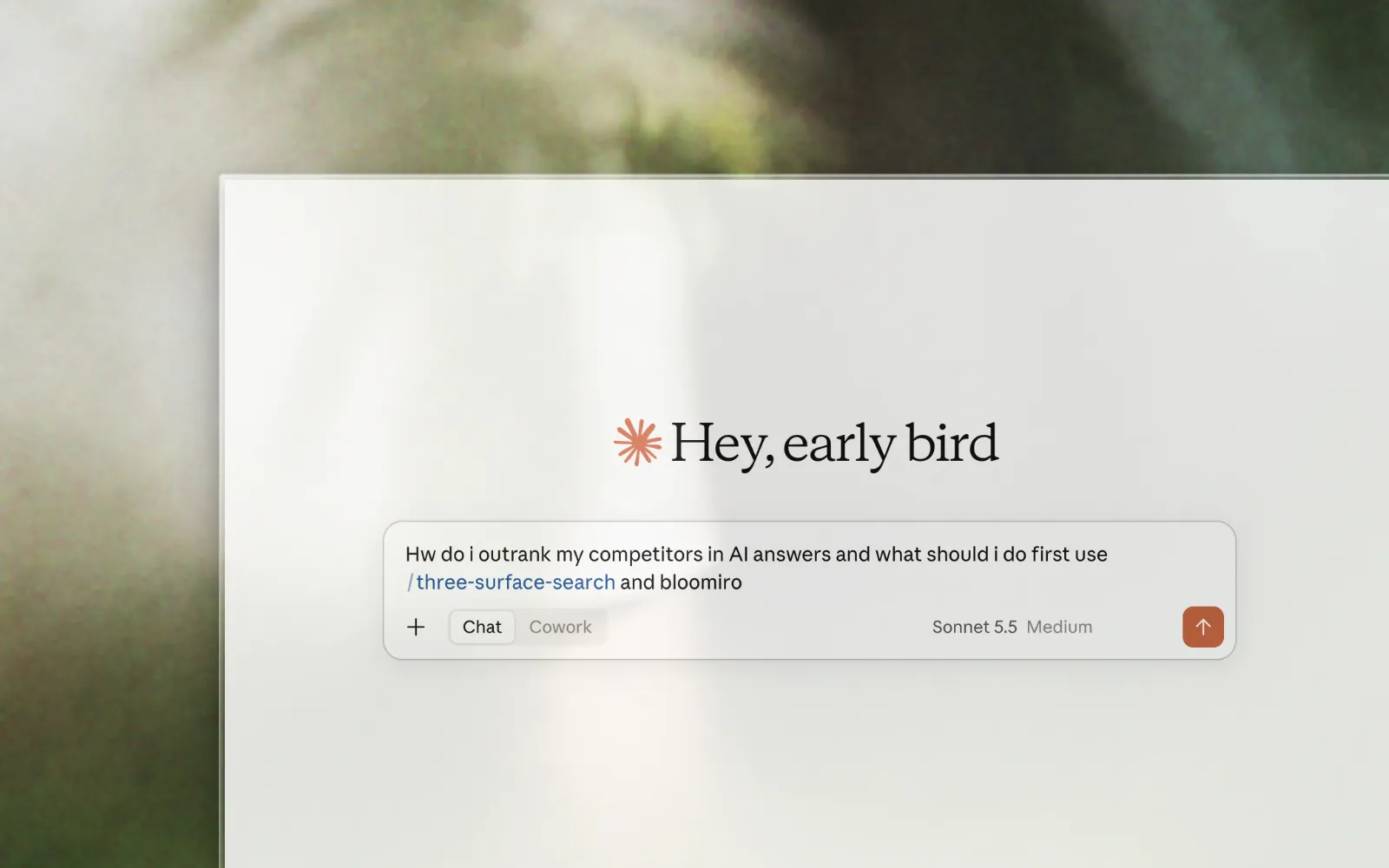
Start with a non-branded question
Do not begin with “What is my company?” That tests recognition after you hand ChatGPT the entity. Start with questions such as:
- What are the best AI search visibility tools for a small SaaS team?
- How can I tell if ChatGPT mentions my business?
- Which tools track brand mentions in ChatGPT and Perplexity?
- What should a marketing team do when customers ask AI instead of Google?
Add branded prompts later. Keep discovery and recognition in separate groups so the result is readable.
Record the answer as evidence
For each prompt, record:
| Field | What to save |
|---|---|
| Prompt | Exact wording, including punctuation |
| Surface | ChatGPT experience and whether web search was active |
| Mention | Whether your brand appears in answer prose |
| Recommendation | Whether the answer clearly suggests your brand |
| Competitors | Brands named or recommended instead |
| Citation | Whether a source URL points to your domain |
| Sources | The source domains ChatGPT used |
| Date | When the observation was made |
Do not count a URL as a prose mention. Do not count a brand name in a source list as a recommendation. Keep those signals separate.
Check the result without overclaiming
ChatGPT answers can vary by session, model version, browsing state, location, and prompt context. A missing mention does not prove that ChatGPT never recommends you. A single mention does not prove category ownership.
The useful question is narrower: across a stable set of buyer prompts and the same review scope, how often does the brand appear, which competitors appear, and which pages or sources support the answer?
What to do if ChatGPT recommends competitors
Inspect the answer before changing the site:
- Is the competitor named because a third-party comparison recommends it?
- Does your site have a clear category page for the exact problem?
- Does your site have a factual comparison page for the named competitor?
- Is your own page cited, or is another site describing your product?
- Does Google Search Console show demand for this topic?
If the missing evidence is on your site, improve the relevant page. If independent pages dominate the answer, build useful third-party corroboration. Do not respond to every missing mention by publishing another similar article.
Manual checks versus repeatable monitoring
Manual checks work for a small experiment. They become difficult when you add Perplexity, Gemini, Google AI Overviews, competitors, citations, and dates.
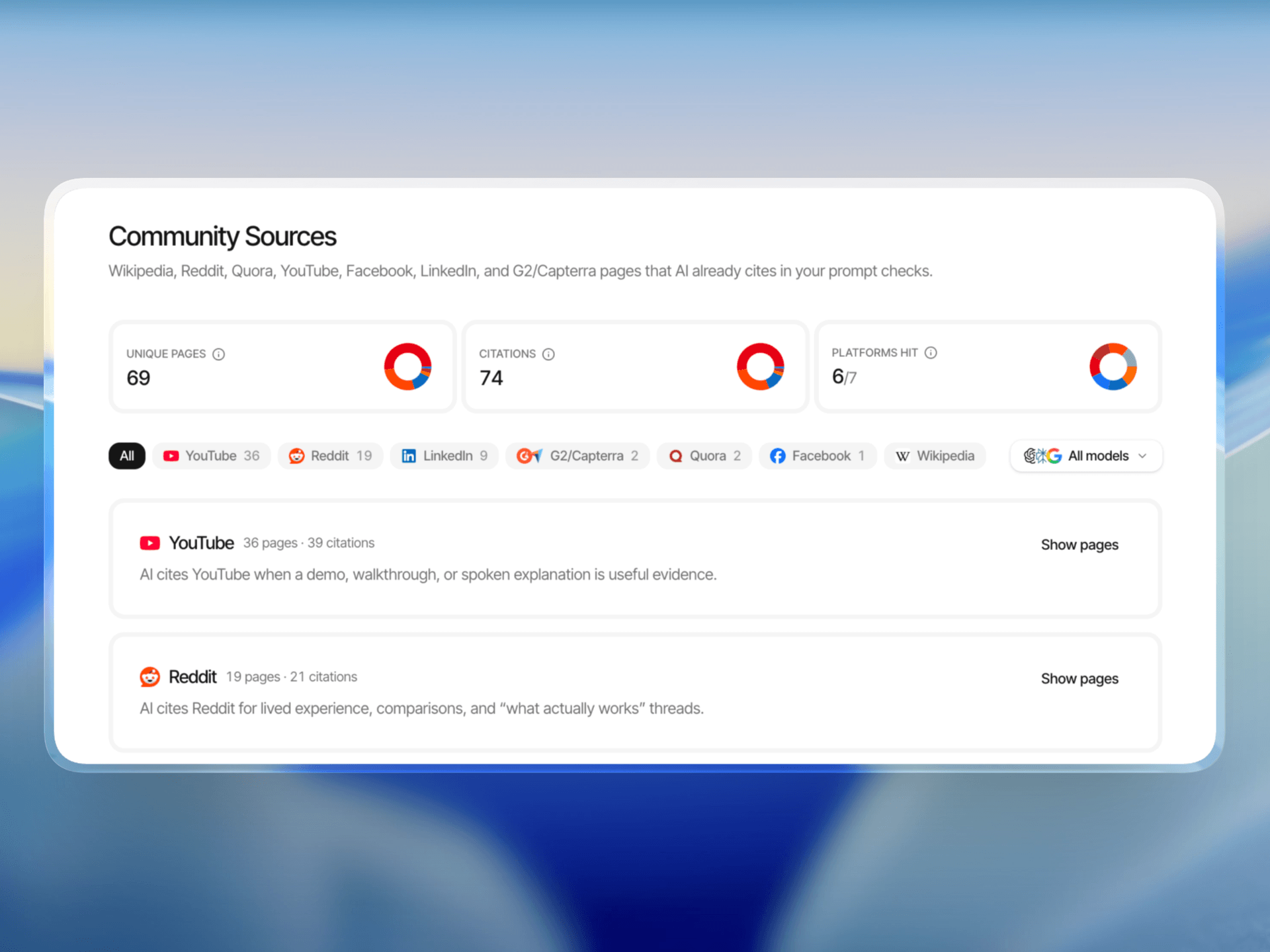
Bloomiro stores saved prompts, provider results, mentions, citations, competitors, and run history. It connects those observations with Google Search Console, page scans, competitor findings, and tasks. The scores still describe the prompt set you selected. They are not a guarantee about every ChatGPT answer.
A simple weekly review
Use the same 10 to 25 prompts for at least four checks. Each week:
- Review failed checks separately.
- Compare mention and citation changes.
- Note competitors that gained or lost appearances.
- Inspect new or changed sources.
- Choose one site or distribution action.
- Record what changed before the next run.
That creates a useful evidence trail without pretending that a generated answer is a fixed ranking.
Related guides
Use this page when you only need to check what ChatGPT says once or for a small prompt set. Fold these siblings in when the job grows:
- How to track ChatGPT brand mentions: ongoing tracking workflow, scoring, and re-runs
- Top AI visibility platforms in 2026: compare platforms once monitoring gets serious
- Track brand mentions in AI search: multi-provider measurement across ChatGPT and other answer engines
- Compare brand vs competitors in AI search: same prompts for your brand and competitors
- Free website visibility checker: crawl and readiness blockers before you blame the model