Updated
How to Get ChatGPT to Recommend Your Business

To get ChatGPT to recommend your business, do these 5 things:
- Check what ChatGPT says about your business today.
- Open your site to ChatGPT's search crawler.
- Build clear pages that answer your customers' questions.
- Get mentioned on other sites ChatGPT reads, like lists and reviews.
- Track the same questions every week to see what changed.
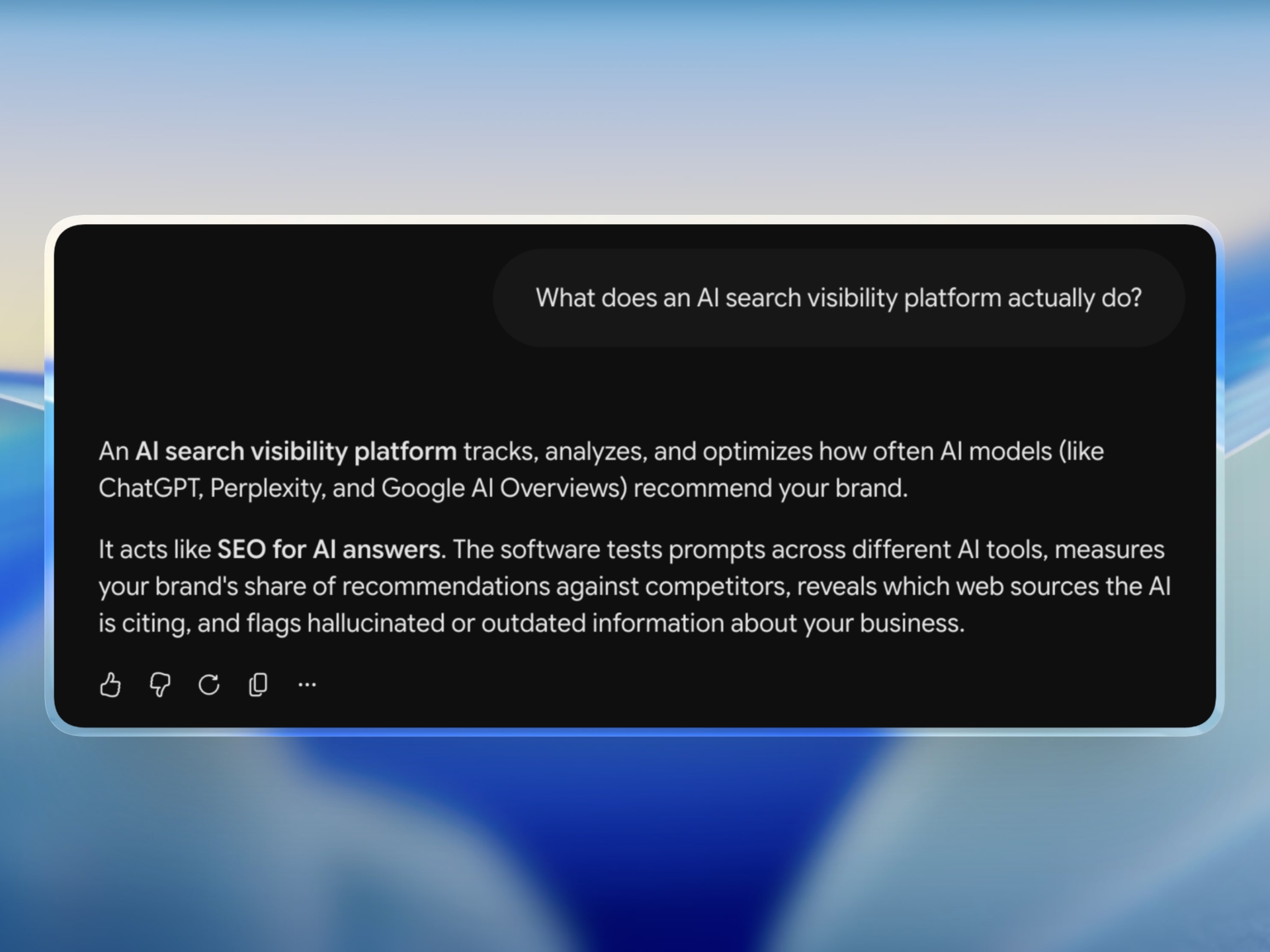
The easiest way to check and track this is with an AI visibility tool like Bloomiro. It shows whether ChatGPT mentions your business, which competitors it recommends instead, which websites it cites, and what you can do to improve your visibility.
How ChatGPT picks businesses
When someone asks ChatGPT for the best running shoes for flat feet, or a good plumber in Leeds, it often searches the web first. OpenAI says it rewrites the question into one or more searches, reads the results and writes a short list.
So you need two things: to be on the pages it finds, and to be easy to describe once it gets there. Well-known brands also get a head start, because ChatGPT can name them before it searches.
Step 1: Check what ChatGPT says about you
Write down 10 to 25 questions a customer would ask, and leave your business name out of most of them. A physio in Bristol might use:
- best physio for back pain in Bristol
- how much does a physio cost in Bristol
- do I need a referral to see a physio
Ask each one in ChatGPT and note who gets named. That's your starting point. You can do this by hand, or set the questions up once in Bloomiro and let it run them for you.
Step 2: Open your site to ChatGPT
OpenAI's search crawler is called OAI-SearchBot. If you block it, your site won't appear in ChatGPT search answers, apart from plain navigation links.
Check your robots.txt, then check your firewall or CDN, because bot protection can block it too. GPTBot is a different crawler used for training, and you can block it without losing search. Our free visibility check is a quick way to start.
Step 3: Build pages that answer the question
ChatGPT's searches are usually more specific than the customer's question. These two examples are made up to show the shape:
| The customer asks | ChatGPT might search |
|---|---|
| good running shoes for flat feet under $100 | best running shoes flat feet under $100 2026 reviews |
| I need an emergency plumber in Leeds | emergency plumber Leeds 24 hour reviews |
When we looked at 23 real searches in one software category on 2 November 2026, 13 included a year, and budgets like "under $50" stayed in the search. So a good page has:
- A title close to the customer's words
- The answer in the first two or three sentences
- Who it's for, what it costs and where you work
- A visible updated date, changed only when the page really changes
- Something only you can add, like your own prices, tests or customer stories
Update a page you already have before you write a new one.
Step 4: Get mentioned on other sites
ChatGPT leans on what others say about you. In the same check, 77 of the 87 sources cited for buying questions were comparison, list or pricing pages, and most came from sites you wouldn't call famous.
- Search your customer questions and find the lists that come up
- Ask those authors to include you, and give them real facts and prices
- Fill in your profiles on review sites and directories
- Answer honestly on Reddit and YouTube, as yourself
Use the same name and the same plain description everywhere. If one page calls you a plumber and another calls you a heating company, you've made the answer harder to write. Where AI answers get their sources has more on this.
Step 5: Track ChatGPT mentions every week
Answers change between runs, so one check proves very little. Re-run the same questions weekly or every two weeks, and look at three things:
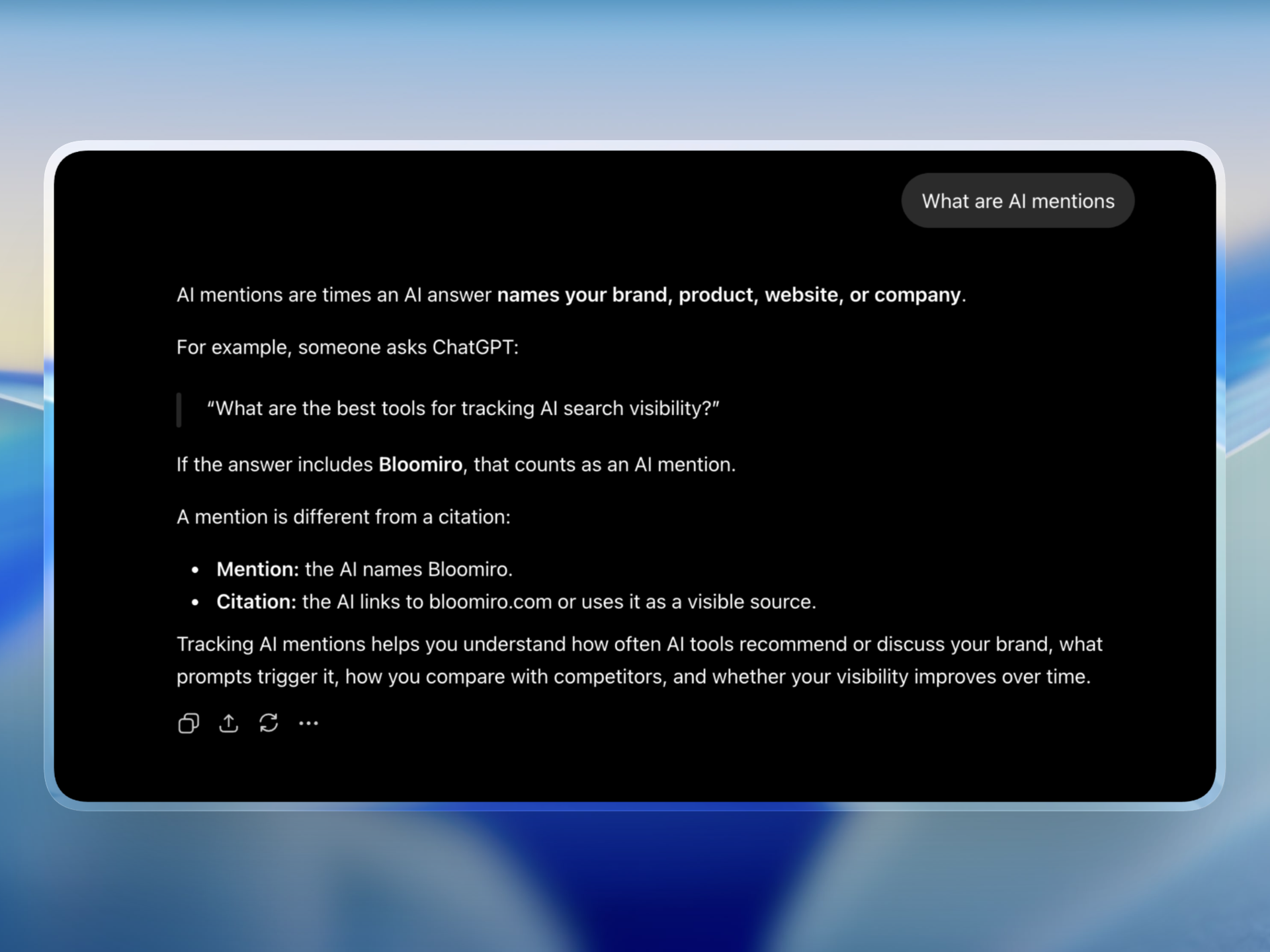
- Mentions: is your business named in the answer?
- Citations: is your site linked as a source?
- Competitors: who is named instead?
A spreadsheet works for a few questions. It gets slow once you add more questions, competitors and AI tools. Bloomiro runs the checks on a schedule, separates mentions from citations, shows the searches ChatGPT ran and turns the gaps into a task list.
If you're a local business
The same five steps apply, with your location on top. OpenAI's own example is ChatGPT turning "good restaurants near me" into a search like "top restaurants San Francisco".
- Write your city and services out on your site, like "boiler repair in Leeds"
- Keep your Google Business Profile, listings and opening hours correct
- Keep collecting honest reviews, and reply to them